

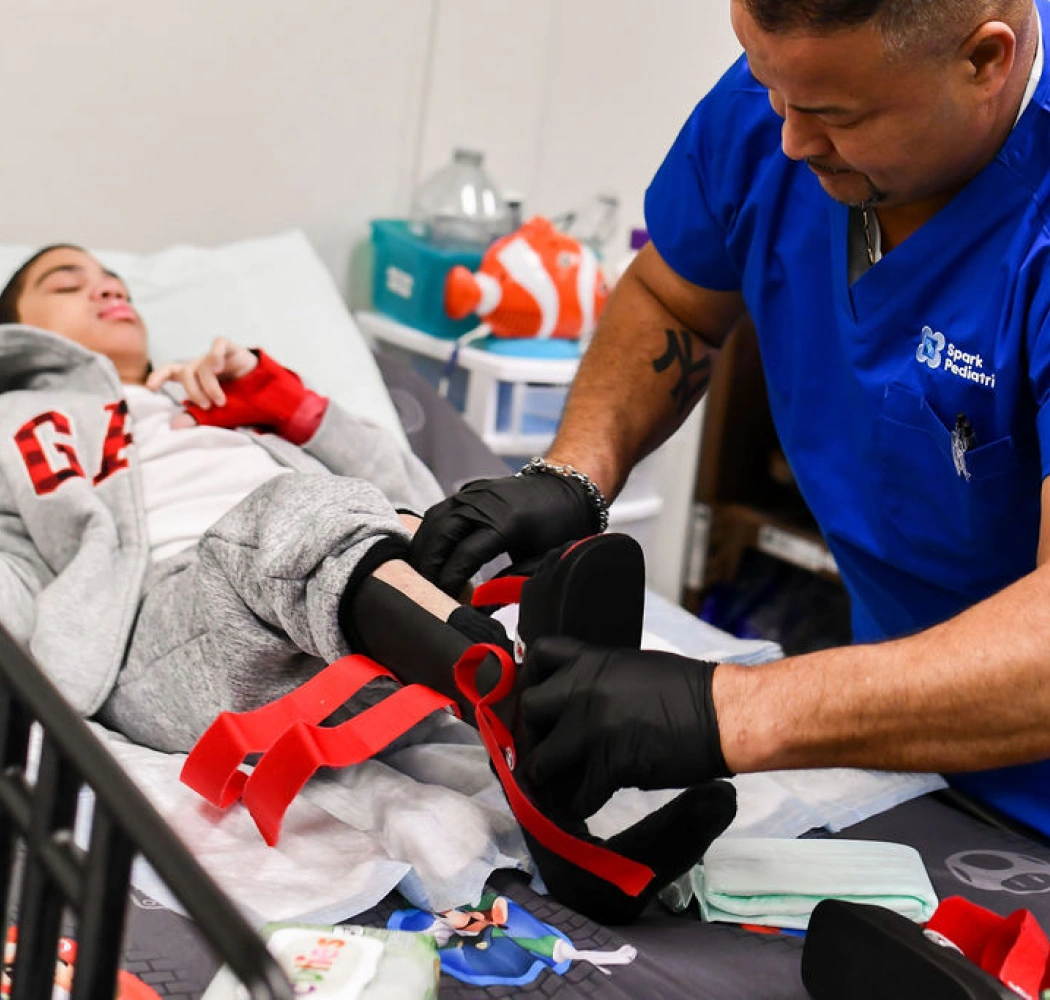


Managing oxygen therapy at home means learning new routines—equipment checks, safety protocols, and monitoring. This guide covers the essentials and where to find support when you need it.
If you'd like to talk with our care team about oxygen support, we're here to help.
New to navigating complex medical needs? Start with what to do first when learning your child has a medical complexity.
What Is Oxygen Dependence in Children?
Oxygen dependence means a child's body needs supplemental oxygen to maintain healthy blood oxygen levels—typically above 90%. A pulse oximeter (a small clip-on device) measures these levels as a percentage called SpO2.
When blood oxygen runs low, the body works harder to compensate. Oxygen therapy bridges that gap, supporting healthy growth and development. Some children need oxygen temporarily while lungs heal; others need it longer-term.
Your doctor sets your child's specific target range and prescribes the right flow rate.
Common Conditions Requiring Oxygen Therapy
Several conditions can require supplemental oxygen in children:
- Bronchopulmonary dysplasia (BPD) — Lung condition in premature babies. Learn more about apnea of prematurity.
- Chronic lung disease — Long-term breathing conditions
- Cystic fibrosis — Genetic condition causing thick mucus in airways (Cystic Fibrosis Foundation)
- Pulmonary hypertension — High blood pressure in lung arteries
- Sleep apnea — Breathing pauses during sleep
- Congenital heart defects — Heart conditions affecting oxygen circulation (American Heart Association)
If your child recently left the NICU, our guide on specialty care after the NICU may help.
Types of Home Oxygen Equipment
Three main systems deliver oxygen at home. Your doctor prescribes the flow rate, and your medical equipment supplier helps select the right system.
Compressed Gas Tanks
Pressurized oxygen in metal cylinders. Portable tanks work for outings. Your supplier delivers refills—call when the gauge drops below 500 psi.
Oxygen Concentrators
Machines that pull oxygen from room air. No refilling needed, but they require electricity. Keep backup tanks for power outages.
Liquid Oxygen Systems
Compact and portable, but more expensive. Insurance often doesn't cover this option, and liquid evaporates over time.
The American Thoracic Society offers detailed equipment comparisons.
Nasal Cannula Care
Most children receive oxygen through a nasal cannula—soft tubing with two prongs that rest in the nostrils. Secure with medical tape, changing tape location daily to prevent skin irritation. Clean weekly; replace every 1-3 months or after illness.
Safety Note: The FDA warns that medical tubing can pose strangulation risk. Secure tubing to clothing and never leave loose loops accessible.
Daily Care Essentials
Daily oxygen management becomes routine with practice. Here are the key habits.
Morning Equipment Check
Each morning: check supply gauge, inspect tubing for cracks, verify flow rate matches the prescription, and clean/reposition facial tape.
Monitoring Oxygen Levels
Check SpO2 readings during rest, after activity, while feeding, and during sleep. Keep a log for medical appointments—note time, activity, and reading.
The American Lung Association explains pulse oximetry in detail.
Equipment Safety
- Secure tubing to clothing to prevent tangles
- Only adjust flow rates if your provider gave specific instructions
- Add distilled water to humidifiers daily
- Keep your supplier's emergency number handy
Oxygen Safety at Home
Oxygen doesn't burn, but it makes fires burn hotter and faster. Fire safety requires consistent attention.
Fire Prevention Essentials
Per the National Fire Protection Association:
- Keep equipment 6+ feet from flames, heat, and sparks
- No smoking anywhere in your home or car
- Post "No Smoking - Oxygen in Use" signs
- Avoid petroleum products (Vaseline, oil-based lotions) near oxygen—use water-based alternatives
- Install smoke detectors on every floor
- Alert your local fire department about home oxygen use
When to Call Your Doctor
First, verify equipment is working: oxygen flowing, tubing connected, correct flow rate.
Call your provider if you notice:
- Blue or pale color around lips or fingernails
- Breathing faster or harder than normal
- Skin pulling between ribs with breaths
- Nasal flaring, grunting, or wheezing
- Unusual drowsiness or extreme fussiness
- Refusing food or fever above 100.4°F
Call 911 if: breathing difficulty is severe, blue color persists, or your child becomes unresponsive.
The American Academy of Pediatrics offers additional guidance on respiratory distress signs.
Staying Active and Preventing Illness
Children on oxygen can participate in normal activities—parks, parties, outings. Portable tanks fit in backpacks and strollers. Your provider may prescribe different flow rates for rest versus activity.
Infection Prevention
Handwashing before caring for your child is the most effective prevention. Limit visitors during cold and flu season, keep vaccinations current, and avoid smoke exposure. The CDC's hand hygiene guidelines cover proper technique.
Skin Care
Rotate tape placement daily. Watch for red marks—try different tape or ask about fabric sleeves. Use only water-based moisturizers near oxygen equipment.
Oxygen Weaning: What to Expect
How long a child needs oxygen depends on their underlying condition. Your pulmonologist monitors progress and adjusts treatment gradually.
Weaning typically involves slowly reducing flow rates while monitoring levels, sometimes transitioning to nighttime-only oxygen before stopping completely. The AAP clinical report on home oxygen details weaning approaches.
Important: Never reduce or discontinue oxygen without your provider's approval—even if your child seems comfortable.
When Professional Care Can Help
Managing oxygen therapy takes significant time. If balancing this care with work, other children, or self-care becomes difficult, professional options exist.
Why Traditional Daycare Can't Accept Children on Oxygen
Most daycares lack the nursing staff and equipment to monitor oxygen levels, adjust flow rates, or respond to respiratory changes. This isn't a limitation of those daycares—they're designed for different needs. Learn more about how medical daycare differs from traditional daycare.
What PPEC Medical Daycare Offers
PPECs (Prescribed Pediatric Extended Care centers) provide skilled nursing care for children with complex medical needs. Staff monitor oxygen levels, adjust flow rates per physician orders, and respond to changes—all while children participate in developmental activities.
Staff-to-child ratios are typically 1:3. We provide some therapy services on-site and welcome your child's existing therapists to conduct sessions at our centers.
Most centers operate Monday-Friday, 6:00 AM to 6:00 PM. Contact your local center for specific hours.
Learn more:
- What is a PPEC? The Complete Guide
- How medical daycare works: A day in the life
- Private duty nursing vs. medical daycare
Coverage and Eligibility
PPEC services are fully covered by Medicaid in Florida and Texas at no cost to qualifying families. Eligibility is based on medical need for skilled nursing—not family income.
Our enrollment team helps guide you through paperwork and authorizations.
Resources:
- Eligibility requirements for PPEC
- How to apply for Medicaid for PPEC services
- How to enroll in PPEC: Step-by-step guide
Frequently Asked Questions
Can a child on oxygen attend daycare?
Traditional daycares typically cannot accept oxygen-dependent children. PPEC medical daycares have nursing staff trained to monitor and manage oxygen therapy. Usually covered by Medicaid at no cost.
Is oxygen therapy safe for children?
Yes, when used as prescribed. Follow fire safety rules: no smoking near your child, keep oxygen 6+ feet from heat/flames, use water-based products only.
How often do oxygen tanks need refilling?
Check gauges daily. Call your supplier at least 24 hours before running low.
Will my child always need oxygen?
This depends on the underlying condition. Many children wean off as their condition improves. Your pulmonologist monitors progress and adjusts treatment when appropriate.
How do I travel with my child on oxygen?
Air travel requires advance airline notification and documentation. Portable concentrators are generally permitted; compressed gas is not. The TSA provides travel guidance.
Next Steps
Schedule a free consultation to tour a Spark Pediatrics center and meet our team. We're happy to answer questions about oxygen care support.