

Your child needs a ventilator to help them breathe. You have questions—about what this means, what care options exist, and what's possible for your child's future.
This guide explains ventilator dependence, outlines care settings (including PPEC medical daycare), and shares what outcomes look like with the right support. If you'd like to talk to our team about your child's care options, we're here whenever you're ready.
Key Takeaways
- Ventilator dependence means your child's body needs mechanical help to breathe—it's a result of various underlying conditions, not a single diagnosis
- Many children improve: About 50% on 24-hour support reduce their hours over time; 18% achieve complete independence
- Care options include: Hospital (acute illness), home ventilation, and PPEC medical daycare
- Quality of life can be excellent: Children on ventilators attend school, make friends, and reach milestones
- Medicaid covers PPEC 100% in most states with zero out-of-pocket costs
What Does Ventilator Dependence Mean?
Ventilator dependence means your child's respiratory system needs mechanical support to breathe adequately. The ventilator delivers air into their lungs when their body can't do this effectively on its own.
This isn't one diagnosis—it results from various conditions affecting the lungs, respiratory muscles, airways, or the brain signals controlling breathing. Some children need temporary support while recovering. Others need long-term assistance depending on their specific condition.
About 2.4 per 100,000 children use home mechanical ventilation—a number that's increased 37% over 14 years as medical advances help more children thrive with complex conditions.
Can Children Come Off Ventilators?
Yes—many can reduce or eliminate ventilator dependence over time.
About 50% of children on 24-hour support significantly decrease their hours, and 18% achieve complete independence. Success depends on the underlying condition, your child's age, and access to specialized weaning programs.
Weaning success rates vary:
- Short-term ventilation: 70-98% wean successfully
- Long-term with specialized programs: 87% show improvement
Children with conditions that can improve (like recovering from acute illness) typically have better weaning odds than those with progressive conditions. Proper nutrition, regular therapy, and consistent monitoring all support the process.
If long-term support is needed: Quality of life can still be excellent. With appropriate care and developmental support, children on ventilators attend school, build friendships, and live full lives. The goal is helping your child thrive—with or without the ventilator.
What Causes Ventilator Dependence in Children?
Several categories of conditions can lead to ventilator dependence. Your child's pulmonologist can explain which specific factors affect their breathing.
Neuromuscular disorders (53% of cases): Conditions like spinal muscular atrophy, muscular dystrophy, or cerebral palsy affecting breathing muscles. The Muscular Dystrophy Association offers condition-specific respiratory resources.
Lung conditions (29% of cases): Bronchopulmonary dysplasia from premature birth, chronic lung disease, or severe respiratory conditions. March of Dimes has helpful information for NICU families.
Airway problems: Tracheomalacia (weakened airway), obstructions, or structural abnormalities.
Brain and spinal cord conditions: Brain injury, spinal cord injuries, or central nervous system disorders affecting respiratory control.
Types of Ventilator Support
Children use two main types: noninvasive (through a mask) and invasive (through a tracheostomy). About 73% use noninvasive support; 27% need invasive ventilation.
Noninvasive Ventilation (NIV)
NIV delivers breathing support through a fitted mask or nasal prongs—no surgery required. Best for children needing part-time support (often during sleep) who can tolerate mask-wearing. Common in neuromuscular conditions where breathing muscles tire at night.
Invasive Ventilation via Tracheostomy
Invasive ventilation delivers air through a tracheostomy—a surgical opening in the neck connecting directly to the windpipe. Best for children needing 24-hour support or those unable to protect their airway.
This enables reliable around-the-clock support, better secretion management, and mobility with portable ventilators. Speech development remains possible with cuffless tubes and speaking valves.
The American Lung Association offers parent-friendly information about ventilator and tracheostomy care.
Where Can Ventilator-Dependent Children Receive Care?
Three main settings support ventilator-dependent children: hospitals (during acute illness), home with nursing support, and PPEC (Prescribed Pediatric Extended Care) centers. Many families combine options—PPEC on weekdays, home care evenings and weekends.
Hospital Care
Hospitals provide intensive care during acute illness, initial diagnosis, or medical instability. Once stable, the goal is typically transitioning to community-based care.
Home Ventilation
Home care keeps your child in a familiar environment with family. This requires someone trained in ventilator management available 24/7, backup equipment, and established emergency protocols.
The challenge: Over 50% of families report difficulty finding adequate home nursing due to nationwide shortages. Even with approved hours, staffing gaps are common.
PPEC Medical Daycare
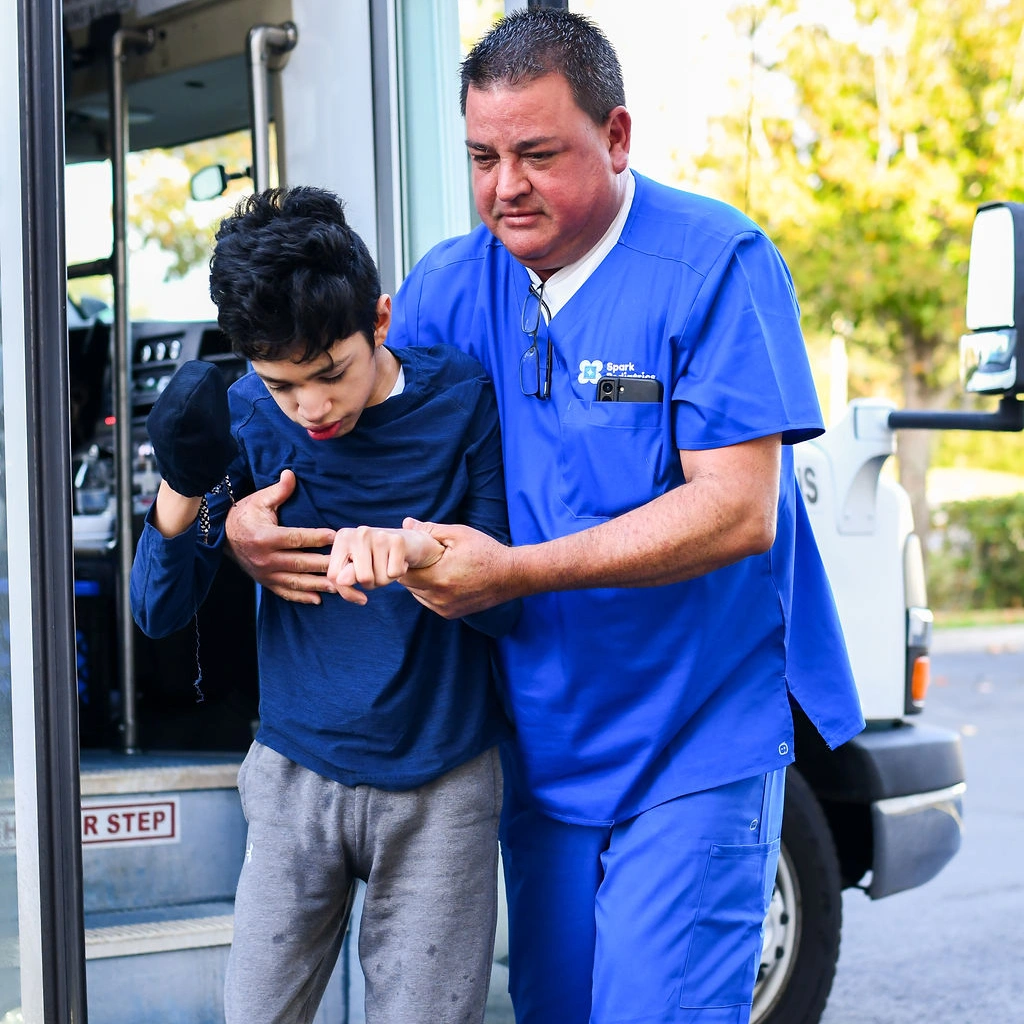
PPEC centers provide specialized medical daycare for children with complex needs like ventilator dependence—combining expert nursing care with developmental activities and peer interaction.
What PPEC provides:
- Skilled nursing with staff-to-child ratios typically around 1:3
- Nurses experienced in ventilator management and tracheostomy care
- Backup power systems and emergency equipment on-site
- Therapy coordination (some services on-site; your existing therapists can also conduct sessions at our centers)
- Age-appropriate activities and socialization with peers
For families: Medicaid covers PPEC 100% in most states with zero out-of-pocket costs. Medicaid also covers transportation—our team helps coordinate scheduling to make pickup and drop-off smooth. Learn more about medical daycare transportation.
Spark Pediatrics operates Florida's largest PPEC network plus Texas facilities. For more on how PPEC compares to other options, see advantages of PPEC over traditional daycare.
How to Choose Care for Your Ventilator-Dependent Child
The right care setting depends on your child's medical needs, your family situation, and what feels sustainable long-term.
Consider PPEC if:
- You want to return to work while your child receives professional care
- Home nursing has been unreliable due to staffing shortages
- Your child would benefit from peer interaction and developmental activities
- You need consistent, dependable daytime care
Questions to ask: Our guide covers 10 questions to ask when choosing a medical daycare. You can also see what other parents say about Spark Pediatrics.
Ready to take the next step? Our guide to enrolling in PPEC walks through the process.
Development and Quality of Life
Children on ventilators can reach developmental milestones and experience childhood fully with proper support.
What's possible:
- Mobility with portable ventilators attached to wheelchairs or strollers
- Speech development with cuffless tracheostomy tubes and speaking valves
- School attendance with trained personnel
- Friendships and participation in adaptive activities
The key is care that addresses both medical needs and childhood development. PPEC centers integrate nursing care with therapy coordination and age-appropriate activities—supporting progress across all areas.
The American Academy of Pediatrics offers additional resources for families.
Insurance and Medicaid Coverage
Medicaid typically covers ventilators, supplies, home nursing (hours vary by state), PPEC services, equipment, and transportation. PPEC is 100% Medicaid-covered in most states with no out-of-pocket costs.
Our team helps answer questions about paperwork and walks you through the authorization process. For step-by-step guidance, see how to apply for Medicaid for PPEC services.
InsureKidsNow.gov provides state-by-state information about children's health coverage.
Emergency Preparedness
All caregivers need training in emergency protocols. PPEC centers maintain backup generators, emergency equipment, and staff trained in pediatric emergency response.
Call 911 immediately for: Blue or gray skin color, ventilator alarms that can't be resolved, tracheostomy obstruction that won't clear, unresponsiveness, or respiratory distress despite ventilator support.
Keep accessible: Backup ventilator (discuss timing with your medical team), extra tracheostomy tubes, manual resuscitation bag, suction equipment with backup power, and emergency contacts.
The CDC's emergency preparedness guide offers planning resources—especially helpful in Florida and Texas for hurricane preparedness.
Supporting Your Family
Caring for a ventilator-dependent child takes significant time and energy. PPEC provides daily respite—when your child attends, you can work, manage responsibilities, or rest.
Organizations like Family Voices and Parent to Parent USA connect families navigating similar experiences. Our team is also here to help connect you with community resources.
If you're new to this journey, our guide for families who've just learned their child has a medical complexity offers practical tools for getting organized.
Next Steps
Schedule a tour of your nearest Spark Pediatrics center to see how we support ventilator-dependent children and their families.
Find a location:
Questions? Contact our team to discuss your child's specific needs.