

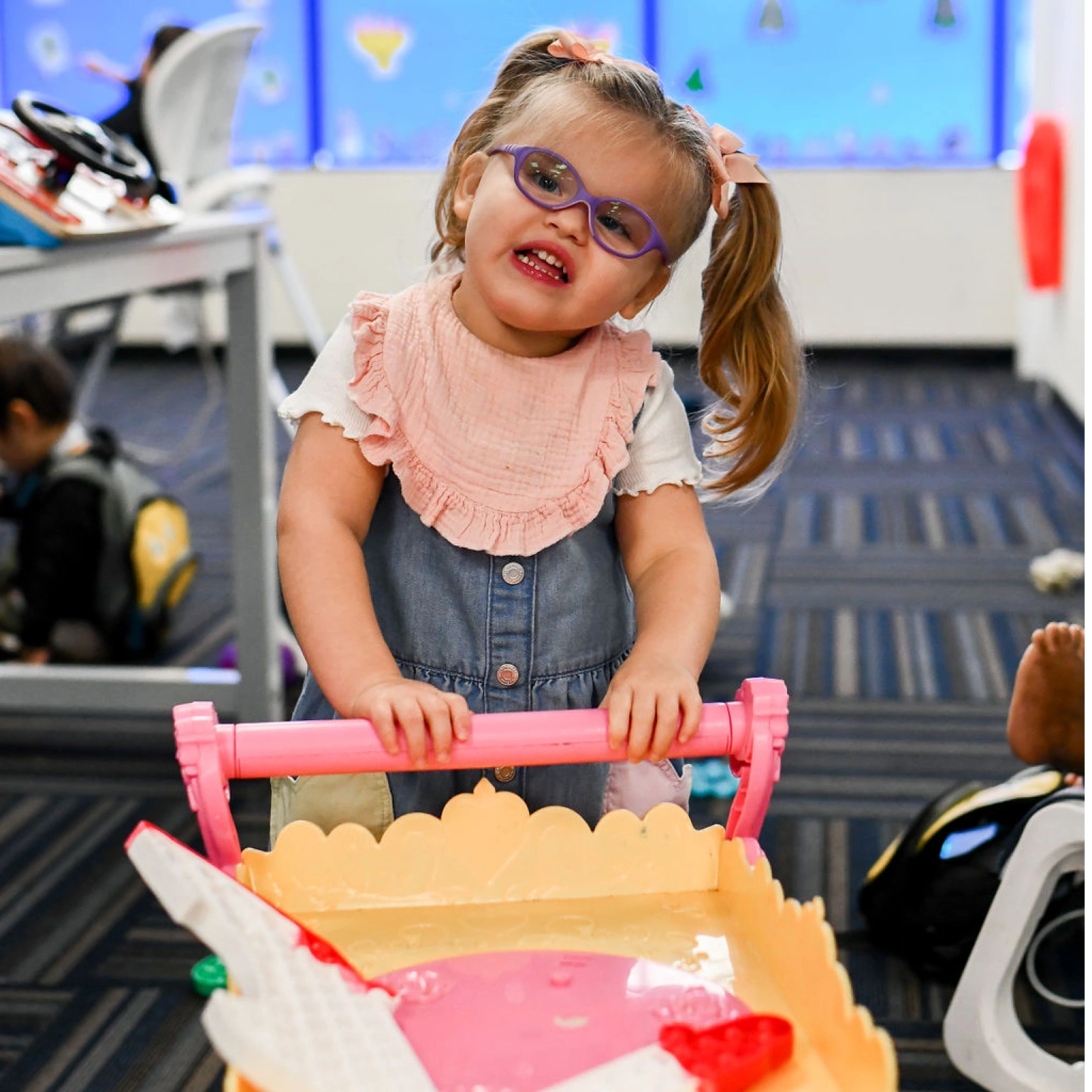


Your NICU graduate is home. Some babies transition smoothly. Others continue needing skilled nursing care throughout the day—the kind that standard childcare can't provide. Medical daycare (PPEC) offers skilled nursing alongside childhood activities. Here's when it becomes the right choice for NICU graduates.
Why NICU Graduates May Need Ongoing Medical Care
About 20-40% of babies who graduate from the NICU have complex medical problems requiring specialty services, according to Contemporary Pediatrics.
These babies may have conditions developed from prematurity or critical illness. Chronic lung disease requires oxygen and breathing treatments. Vision complications need ongoing monitoring. Feeding difficulties may require G-tubes. Developmental delays benefit from integrated therapy.
Many depend on medical equipment—oxygen, feeding tubes, apnea monitors. Some need precisely timed medications throughout the day. Standard childcare staff can't manage ventilators, feeding tubes, or emergency medical protocols.
Medical daycare (Prescribed Pediatric Extended Care or PPEC) provides licensed nurses delivering skilled nursing care while children participate in age-appropriate activities.
Common NICU-Related Conditions
Bronchopulmonary Dysplasia (BPD): Between 20-50% of very premature infants develop this chronic lung condition. Many need home oxygen, frequent breathing treatments, and monitoring to prevent respiratory crises.
Retinopathy of Prematurity (ROP): Affects developing blood vessels in premature babies' eyes. Can cause vision complications and increases risk for developmental challenges requiring ongoing support.
Feeding Difficulties: Many NICU graduates need G-tubes due to coordination issues, oral aversion, or reflux. Tube feeding management requires specialized knowledge and training.
Developmental Delays: Research shows NICU graduates have higher rates of cognitive, motor, and language challenges. Early intervention and therapy support development.
Note: We're developing detailed guides on each of these conditions. For now, talk with your child's medical team about their specific needs.
Corrected Age and Development
NICU graduates' development is assessed by "corrected age"—chronological age minus weeks born early.
A six-month-old born three months early has a three-month corrected age. Medical daycare staff who understand this provide developmentally appropriate activities and realistic expectations.
For comprehensive information on medical daycare, read our complete guide for medically complex children.
When Medical Daycare Becomes the Right Choice
Medical daycare becomes appropriate when your child needs skilled nursing interventions multiple times daily.
Signs Your Child May Benefit
Consider medical daycare if your child:
- Requires tracheostomy care, ventilator support, or frequent oxygen
- Has feeding tubes requiring specialized management
- Needs seizure monitoring and medication throughout the day
- Depends on multiple medical devices requiring trained oversight
- Has complex medical needs best supported by continuous nursing care
Standard daycare cannot safely accommodate these needs. Home health provides intermittent visits. Medical daycare offers continuous skilled nursing throughout the day.
Timeline Considerations
3 Months Post-Discharge: You're establishing patterns. If ongoing medical interventions are required daily, exploring medical daycare options makes sense.
6 Months Post-Discharge: The most common transition point. Medical needs have clarified, and families have better understanding of long-term requirements.
1 Year and Beyond: Even with stable medical needs, combining developmental support with medical oversight works well for many NICU graduates.
Timing depends on your child's needs and your family's situation. Discuss your specific timeline with our team—we help families determine what works.
How Medical Daycare Supports NICU Graduates
Medical daycare provides skilled nursing care while children play, learn, and socialize with peers.
NICU-Experienced Nursing Expertise
Spark centers are staffed with nurses who have NICU or PICU experience. These nurses recognize subtle signs in babies with chronic lung disease, understand corrected age development, and handle complex equipment confidently—because they managed similar cases in intensive care units.
This specialized background matters when supporting conditions developed from prematurity.
Reducing Hospital Readmissions
Research shows comprehensive medical daycare can reduce hospitalizations by up to 60%.
Early problem detection prevents escalation. A respiratory infection gets identified immediately, treatments adjust, specialists get notified—before it becomes an emergency. Precise medication management prevents complications. Direct communication with medical teams ensures coordinated care.
Integrated Therapy
Physical, occupational, and speech therapists can work with your child on-site. Therapy happens alongside medical monitoring, with activities designed for your child's corrected age and abilities.
No separate appointments to coordinate across town.
Safe Peer Interaction
Medical daycare provides socialization with other medically complex children in environments designed for their safety.
Children interact with peers who have similar medical needs. Equipment and support are normal parts of the day. Centers maintain strict infection control protocols—screening, sanitation, immediate response to illness—protecting medically vulnerable children.
Learn more about Spark's medical daycare services.
What to Look for in Medical Daycare
The right medical daycare has expertise specifically supporting NICU graduates.
Verify NICU-Specific Experience
Ask directly: "Do you have nurses with NICU or PICU experience?"
Verify comfort with your child's specific equipment. Request details about emergency protocols. Staff should answer confidently with specific procedures—not vague reassurances.
Check Staff Ratios
Medical daycare for complex children typically maintains 1:3 staff-to-child ratios. Lower ratios enable consistent monitoring, precise medication management, and immediate response while providing developmental activities.
Assess Communication
Look for real-time updates, multiple daily check-ins, and detailed reports. You should receive clear communication about your child's status and easy access to staff for questions.
For comprehensive evaluation criteria, read our 10 essential questions to ask medical daycare providers.
Medicaid Coverage for Medical Daycare
Medicaid typically covers medical daycare at 100% with zero out-of-pocket costs for eligible children.
Medical daycare qualifies as medically necessary under the EPSDT benefit when a physician certifies your child needs skilled nursing care throughout the day.
Qualification
Your child needs active Medicaid coverage, physician certification of skilled nursing need, and medical documentation. Most NICU graduates with ongoing medical complexity qualify.
Authorization Process
Your child's doctor documents medical necessity. The center evaluates and develops a care plan. Documentation goes to Medicaid for review. Authorization typically completes within 1-2 weeks.
Spark's enrollment specialists handle all paperwork, authorizations, and renewals. You provide basic information and medical records—our team manages the process.
If Denied
Initial denials can be reconsidered with additional documentation. Spark's insurance specialists help families gather supporting records and advocate through the reconsideration process.
Real Stories from NICU Parents
"My son has been attending this center for almost a year and we have had such a wonderful experience! Between all of the struggles with my son's health, we have had other health issues with his father. Everyone has been so kind, caring, and compassionate. I don't know if I will ever be able to trust another facility to take better care of my son." — Patricia T.
"The DON, nurses, physical therapist, occupational therapist, speech therapist...go above and beyond for their patients they are not just patients but they are like their children…they stimulate learning and genuinely care for the children." — Ayanna
"Even though my child isn't verbal I can tell she enjoys her day at school and it bring me joy...for making my child feel just as special to you all as she is to me." — D. Harris
Getting Started with Spark
Schedule Your Consultation
Meet our NICU-experienced staff, tour a center, and discuss your child's specific needs. No obligation—just information to help you make the best decision.
Schedule Your NICU Graduate Consultation
What Happens Next
Our medical team develops a care plan with your child's doctors and you. Our enrollment specialists handle Medicaid paperwork (typically 1-2 weeks). Families usually start with shorter days, gradually increasing.
You'll receive regular updates and comprehensive daily reports.
Frequently Asked Questions
Can NICU graduates attend regular daycare?
Most NICU graduates with ongoing medical needs cannot attend regular daycare safely. Standard staff cannot manage oxygen, trach care, feeding tubes, or seizure protocols. Medical daycare provides the skilled nursing these children require.
How does medical daycare differ from home health?
Home health provides intermittent nursing visits. Medical daycare provides continuous skilled nursing for full days with peer interaction and integrated therapy. Many families use both.
Will staff understand NICU-specific conditions?
Spark's staff includes NICU and PICU-experienced nurses who understand prematurity complications, corrected age, and complex equipment. Ask any provider about specific NICU/PICU backgrounds.
Can you manage complex medical equipment?
Yes. Licensed nurses provide trach care, ventilator management, G-tube feeds, and medication administration. Spark centers maintain trained staff with emergency protocols.
What if my child needs hospitalization?
Staff coordinate with emergency services, provide detailed medical information, and notify parents immediately. We update care plans when your child returns.
Is therapy integrated?
Many centers welcome your child's therapists to conduct on-site sessions. Some offer therapy services directly. The goal is consolidating appointments.
What about developmental delays?
Medical daycare supports children with medical needs and developmental delays. Staff provide corrected age-appropriate activities while monitoring medical status.
How quickly can we start?
Timing depends on your child's readiness. Enrollment typically takes 1-2 weeks for authorization and care planning.
Next Steps
Medical daycare combines skilled nursing with childhood experiences—addressing medical and developmental needs together.
Spark's NICU-experienced staff, 100% Medicaid coverage, and multiple locations provide options for supporting your NICU graduate.
Schedule your consultation to learn more.