

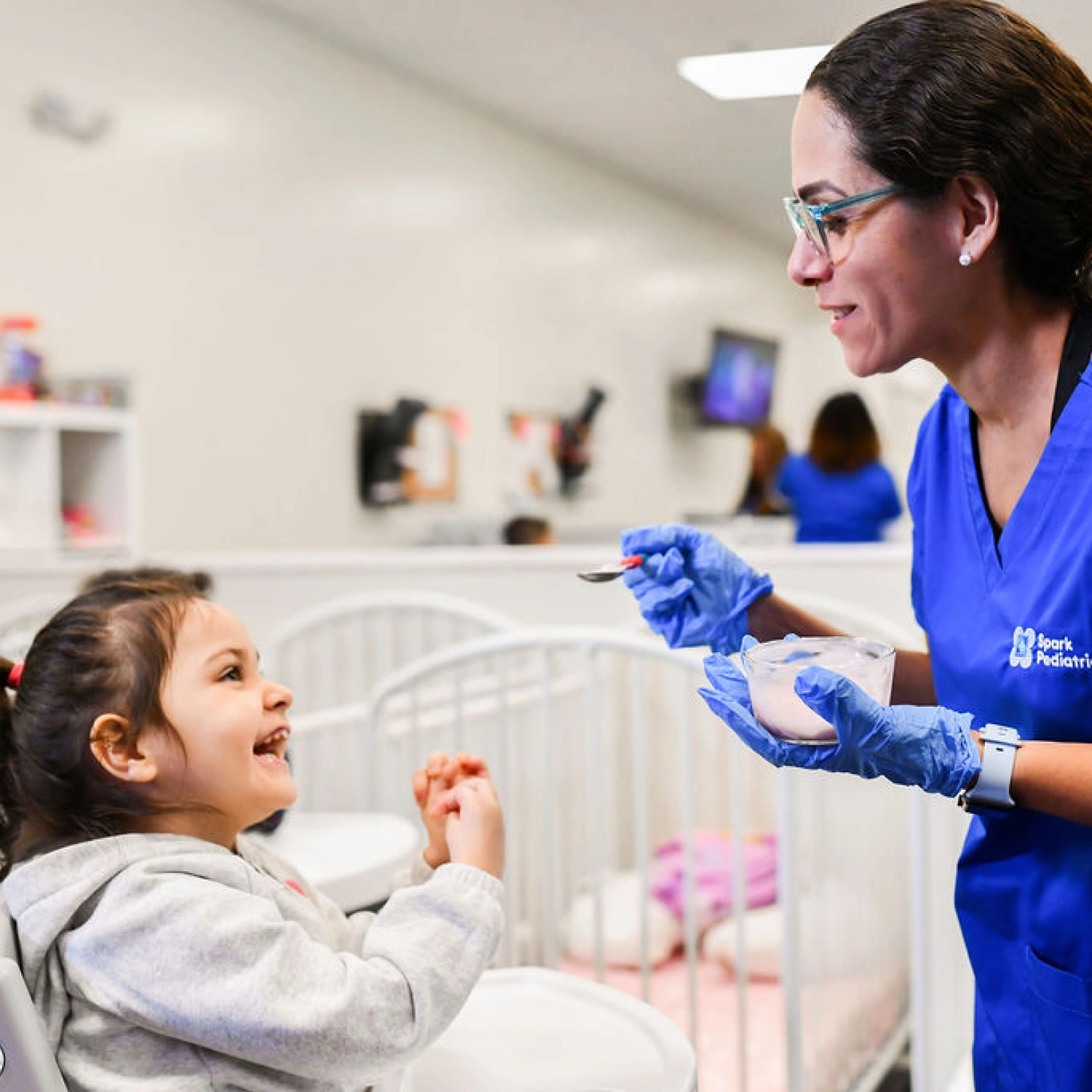


Finding safe, professional care for a child with epilepsy means finding caregivers who understand seizure protocols, recognize warning signs, and respond confidently during medical events. Medical daycare centers provide this specialized care with trained nurses on-site full-time.
Here's exactly how seizure management works at medical daycare.
Understanding Childhood Epilepsy and Seizure Types
Epilepsy is a brain condition causing two or more unprovoked seizures, affecting approximately 456,000 U.S. children. Seizures happen when abnormal electrical activity in the brain temporarily disrupts normal signals.
Different parts of the brain control different body functions—which is why seizures can look so different. Doctors use electroencephalograms (EEG) to measure brain wave patterns and identify seizure activity in specific brain regions.
Common Seizure Types Medical Daycare Manages
Medical daycare nurses are trained to recognize and respond to all childhood seizure types:
Research shows 59-73% of children achieve good seizure control with consistent medication adherence. Professional medication administration at medical daycare helps maintain this consistency.
For comprehensive medical information about epilepsy types and treatments, Cleveland Clinic provides detailed epilepsy resources.
Why Medical Daycare for Children with Epilepsy
Medical daycare (called PPEC - Prescribed Pediatric Extended Care) provides registered nurses on-site full-time with specialized training in seizure management and emergency response.
Traditional daycares typically offer only basic first aid training with staff-to-child ratios of 1:10 or higher. Medical daycare maintains 1:3 ratios with licensed nurses continuously present.
What Makes Medical Daycare Different
Medical daycare centers are specifically licensed to provide skilled nursing care for children with complex medical needs:
- Licensed RNs on-site continuously (not on-call or periodic check-ins)
- 1:3 staff-to-child ratios enabling constant observation
- Emergency medication administration capability following physician orders
- Seizure-specific safety protocols and emergency equipment
- 100% Medicaid coverage through the EPSDT benefit for eligible children
Our complete guide to medical daycare for medically complex children explains how PPEC works, eligibility requirements, and the enrollment process.
The Medication Adherence Advantage
Poor medication adherence increases negative outcomes by three times in childhood epilepsy. Professional administration eliminates missed doses and timing inconsistencies.
Nurses give medications at exact prescribed times daily. Daily seizure documentation also helps neurologists identify patterns and adjust treatment when needed.
How Nurses Respond During Seizures
Medical daycare nurses follow the "3 S's" seizure protocol developed by the Epilepsy Foundation:
The 3 S's Seizure Response Protocol
1. STAY with the child
A nurse stays with your child and immediately starts timing the seizure. Timing determines whether emergency medications or 911 are needed.
2. Keep the child SAFE
The nurse clears the area of hard objects, guides your child to the floor if standing, cushions their head, and loosens tight clothing.
Staff never restrain movements, put anything in the mouth, or give food or water during seizures.
3. Turn the child to their SIDE
Your child gets turned to the recovery position (lying on side, mouth toward ground) to keep the airway clear and prevent choking.
Nurses call 911 if seizures last over 5 minutes, if your child has trouble breathing afterward, or if multiple seizures happen without recovery between them.
Emergency Medication Administration
Nurses can administer rescue medications (rectal diazepam, nasal midazolam, or others) when your child's Seizure Action Plan criteria are met.
The process includes dual verification—two staff members independently confirm child identity, medication, dose, timing, and route before administration. Parents receive immediate notification when emergency medications are given.
Individualized Seizure Action Plans
Every child has a physician-created Seizure Action Plan documenting their specific seizure types, warning signs, triggers, response protocols, and emergency medication criteria.
All staff train on each child's individual plan before that child's first day. Plans get reviewed and updated regularly as your child's needs change.
Real-Time Parent Communication
Parents receive phone calls immediately when seizures occur. Nurses document exact start/end times, seizure type, interventions provided, recovery time, and any unusual features.
Daily seizure logs and monthly pattern summaries get shared with parents and (with permission) your child's neurologist. This documentation helps medical teams adjust treatment based on observed patterns.
Social Development and Peer Support
Children with epilepsy experience social skills deficits at higher rates—73% compared to 33% of their siblings without epilepsy. Medical daycare provides peer interaction in a medically-safe environment where seizures are understood and managed professionally.
When children spend time with peers who have similar medical needs, they develop friendships without fear of judgment during seizures. Other children at the center understand medical equipment and procedures as normal parts of their environment.
This peer support can reduce the social isolation that sometimes develops when children avoid activities due to seizure concerns.
Common Questions About Seizure Care
Can medical daycare handle my child's specific seizure type?
Yes. Medical daycare nurses are trained in all pediatric seizure types including absence, tonic-clonic, focal, and status epilepticus. Each child's Seizure Action Plan guides staff on your child's specific seizure patterns and response protocols.
What if a seizure happens while nurses are helping another child?
The 1:3 staff ratio ensures multiple nurses are always present and observing. If one nurse responds to a medical need, others maintain continuous visual supervision of remaining children.
How do you prevent medication errors?
Licensed RNs use the five-check process: verifying patient identity, medication name, correct dose, proper timing, and administration route. A second staff member independently verifies everything before medication is given.
How much does medical daycare cost?
Medical daycare is fully covered by Medicaid through the EPSDT (Early and Periodic Screening, Diagnostic, and Treatment) benefit for children under 21 who require skilled nursing care. There are no copays or out-of-pocket costs for eligible families.
Enrollment specialists handle all Medicaid paperwork and authorization renewals. For detailed coverage information, Medicaid's EPSDT benefit page explains eligibility and covered services.
Have specific questions about your child's eligibility? Contact our enrollment team for answers.
What about after-school or weekend care?
Many medical daycare centers offer after-school programs (typically 3:00-6:00 PM), weekend hours, and summer programs when school is out. Contact specific centers for schedule details.
What to Look for in a Medical Daycare
When evaluating medical daycare options for your child with epilepsy, consider these factors:
Nursing qualifications and experience
Look for centers with pediatric-trained RNs who have NICU or PICU backgrounds. Ask about seizure-specific training and how often nurses update their emergency response skills.
Staff-to-child ratios
Lower ratios (1:3 or better) enable the continuous observation children with epilepsy need.
Communication systems
Families should receive immediate notification during seizures plus regular pattern documentation. Ask how quickly parents are contacted and what information is shared.
Cultural and language support
If you're most comfortable communicating in Spanish, Haitian Creole, or other languages, confirm staff can discuss medical information in your primary language.
Geographic accessibility
Consider commute times and whether transportation services are available through Medicaid.
For a comprehensive evaluation framework, see our guide to choosing the right medical daycare.
Why Families Choose Spark Pediatrics
Spark operates Florida's largest PPEC network with 13+ centers across Florida and growing Texas locations. Every center maintains at least one nurse with extensive pediatric critical care experience on-site continuously.
Our care model has documented a 60% reduction in hospitalizations compared to home care alternatives—outcomes observed across families we serve. Families also report decreased emergency room visits and better medication adherence.
Most centers have staff fluent in Spanish and Haitian Creole with cultural competency training for inclusive care. Parent support groups, educational workshops, and resource connections provide support beyond daily medical care.
Find a Spark Pediatrics center near you to check locations, hours, and availability.
Getting Started
Schedule a no-obligation consultation to tour the facility, meet nursing staff, and learn about the enrollment process.
What to expect:
- Meet the medical director and nursing team
- Tour seizure-safe environments and play areas
- Discuss your child's specific seizure patterns
- Learn about the 1-2 week enrollment timeline
- Ask all your questions
What you'll need:
- Current physician orders and medication list
- Existing Seizure Action Plan (or we'll help create one with your doctor)
- Medicaid insurance information
- Emergency contact details
Schedule your consultation to see if medical daycare is right for your child.
Conclusion
Medical daycare provides professional seizure management while supporting your child's development and peer relationships. Trained nurses follow individualized protocols, administer medications consistently, and communicate immediately with families when medical events occur.
With Medicaid coverage making this specialized care accessible, families can explore options that combine medical expertise with childhood activities.
Contact Spark Pediatrics to learn more about our epilepsy care programs and schedule a center tour.