

Many parents wonder whether their child needs skilled nursing at daycare or if other care options would work better. This guide explains what skilled nursing care is, which children qualify, and how to find quality providers.
What Is Skilled Nursing Care for Children?
Skilled nursing care is medical care provided by licensed nurses (RNs and LPNs) for children who need professional medical interventions throughout the day. This includes managing medical equipment, administering medications, monitoring vital signs, providing respiratory treatments, and responding to medical changes.
Regular daycare staff can handle basic care and activities. Skilled nurses handle medical procedures that require professional judgment and licensing.
The Difference Between Skilled and Custodial Care
Skilled nursing involves medical interventions that require a licensed professional. Examples include adjusting oxygen levels based on saturation readings, recognizing early respiratory distress, or managing complex medication schedules.
Custodial care involves helping with daily activities like bathing, dressing, and feeding. These tasks don't require a nursing license.
This distinction matters for insurance coverage. Medicaid covers skilled nursing as a healthcare service under EPSDT benefits. Regular daycare is classified as childcare and isn't covered.
Does Your Child Need Skilled Nursing at Daycare?
Your child needs skilled nursing if they require medical interventions multiple times daily that must be performed by licensed nurses. The key factors are frequency, complexity, and whether the interventions require professional medical judgment.
Medical Technology That Requires Skilled Nursing
Children using this equipment need professional nursing supervision:
- Ventilators (including BiPAP or CPAP requiring monitoring)
- Tracheostomy requiring suctioning and care
- Feeding tubes needing skilled management
- Oxygen therapy requiring continuous monitoring
- Central lines, PICC lines, or medication ports
- Nebulizer treatments with chest physiotherapy (multiple times daily)
- Apnea monitors
Medical Interventions That Require Skilled Nursing
Children needing these interventions throughout the day require skilled nursing:
- Medication administration with precise timing (beyond school nurse capabilities)
- Continuous vital sign monitoring
- Seizure monitoring and response for uncontrolled seizures
- Respiratory treatments more than twice daily
- Wound care requiring sterile technique
- Blood glucose monitoring with insulin administration
Common Qualifying Conditions
- Chronic respiratory conditions (BPD, severe asthma, chronic lung disease)
- Neurological conditions (uncontrolled seizure disorders, hydrocephalus with shunt)
- Cardiac conditions requiring monitoring
- Metabolic disorders requiring strict protocols
- Complex genetic syndromes
- Post-surgical recovery requiring skilled observation
For a complete list of qualifying conditions, see our guide to PPEC eligibility.
What Doesn't Require Skilled Nursing
Not every medical need requires skilled nursing. Well-controlled seizures with occasional breakthrough, straightforward G-tube feedings, or developmental delays alone typically don't require this level of care.
Have questions about your specific situation? Schedule a consultation to discuss your child's needs with our medical team.
What Skilled Nurses Do During the Day
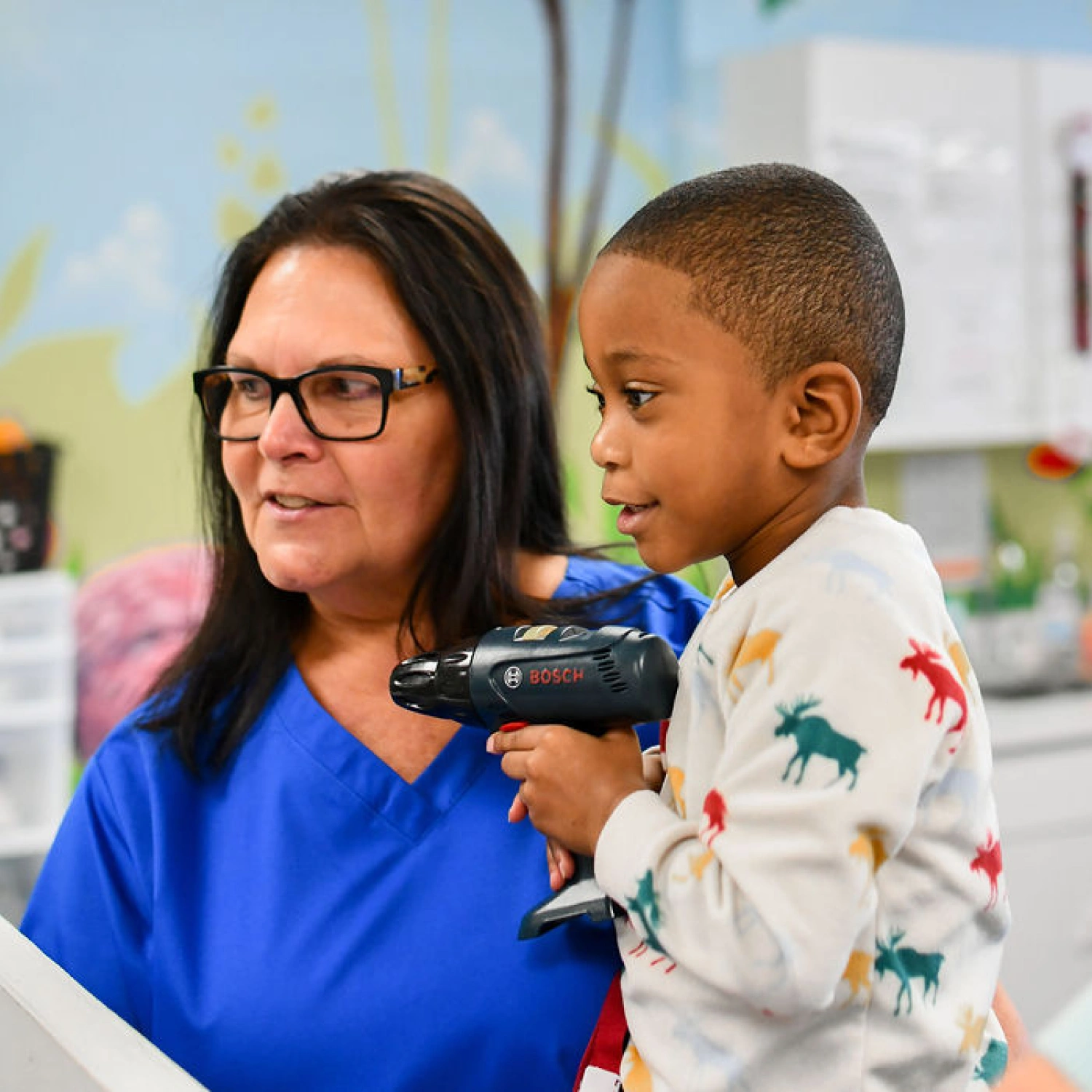
Skilled nurses provide continuous medical supervision while children participate in age-appropriate activities. They conduct health assessments, administer medications and treatments, monitor for changes, and coordinate with therapists—all while children play, learn, and interact with peers.
A Typical Day
Morning: Nurses conduct arrival health assessments, check vital signs, administer morning medications, and provide breakfast support or tube feeding management.
Throughout the day: RNs monitor children continuously at 1:3 ratios (Florida-mandated). Medical interventions happen during activities—breathing treatments during story time, suctioning during art projects. Therapy sessions occur with nursing oversight.
Afternoon: Final medications and treatments are administered. Parents receive detailed handoffs covering medical interventions, vitals, concerns, and daily activities.
Research shows that combining medical care with developmental support during the first three years can prevent 42% of children from requiring special education later.
Nursing Qualifications That Matter
The qualifications of nursing staff directly impact your child's safety. Understanding credential levels helps you evaluate providers.
RN vs. LPN vs. CNA
RNs (Registered Nurses) complete 2-4 years of education, perform comprehensive assessments, create care plans, and make medical decisions. They supervise all other staff.
LPNs (Licensed Practical Nurses) complete one year of education, administer medications, and provide basic treatments under RN supervision.
CNAs (Certified Nursing Assistants) complete 4-12 weeks of training and help with daily activities but cannot administer medications or perform skilled procedures.
For medically complex children, RNs should lead the care team.
Why NICU and PICU Experience Matters
NICU and PICU nurses care for the sickest children in hospital critical care units. They've managed ventilators, responded to codes, and made rapid assessments during emergencies. Pediatric Critical Care Certification requires 1,750 hours of direct care with critically ill children.
This experience means faster problem recognition and confident emergency response—the difference between a nurse who's handled similar situations and one reading a protocol for the first time.
Staff Ratios
Florida requires 1:3 nurse-to-child ratios for PPEC centers (one nurse for every three children maximum). Regular daycare ratios are typically 1:10 to 1:20. Lower ratios mean your child receives continuous attention and nurses can respond immediately to changes.
Skilled Nursing Daycare vs. Home Nursing
Both skilled nursing daycare and home nursing provide medical care by licensed nurses. The main differences are setting, socialization opportunities, and scheduling structure. Many families use both—daycare during work hours and home nursing for evenings or overnight.
When Each Option Makes Sense
Home nursing provides 1:1 care in your home. Best for: overnight care needs, children requiring maximum individual attention due to medical instability, or families preferring home-based care.
Skilled nursing daycare provides medical care in a center with peers. Best for: daytime care during work hours, children who would benefit from peer interaction, families needing structured respite, and consolidating multiple therapies in one location.
Research shows children with medical complexity benefit from peer interaction when appropriate support systems integrate medical and social needs.
Why Medicaid Covers Skilled Nursing Daycare
Skilled nursing daycare is typically 100% covered by Medicaid with no out-of-pocket costs because it's classified as a healthcare service, not childcare.
The Classification Difference
Healthcare services (covered by Medicaid):
- Physician-prescribed as medically necessary
- Provided by licensed medical professionals
- Addresses medical conditions
- Prevents more costly care
Childcare services (not covered):
- No physician prescription required
- Provides supervision and activities
- Convenience for working parents
Under EPSDT benefits, Medicaid must cover any medically necessary service for children under 21.
Authorization Process
Most PPEC centers handle all authorization paperwork. The process typically takes 1-2 weeks and involves:
- Physician documents medical necessity
- PPEC center evaluates your child
- Center submits documentation to Medicaid
- Medicaid authorizes services
- Your child starts once approved
Our enrollment specialists handle all paperwork details. Learn about the enrollment process.
Choosing a Quality Skilled Nursing Daycare
When evaluating providers, focus on nursing credentials, safety protocols, and communication systems. Ask specific questions and trust your observations during tours.
Key Questions to Ask
About nursing staff:
- "How many nurses have NICU or PICU experience?"
- "What certifications do your RNs hold?" (Look for PALS, ACLS, CCRN)
- "What's your RN to LPN to CNA ratio?"
- "How do you maintain 1:3 ratios during lunch, rest time, and shift changes?"
About safety:
- Ask to see emergency equipment (crash cart, oxygen, suction machines, AED)
- "What's your emergency response protocol for [your child's specific condition]?"
- "How do you handle infection control?"
- "Do you have backup power for ventilator-dependent children?"
About communication:
- "How will you update me during the day?"
- "What's included in daily reports?"
- "Can I call anytime?"
- "When do you contact parents about medical incidents?"
Good centers will answer specifically. Vague responses are a red flag.
How Spark Pediatrics Ensures Quality Skilled Nursing
Every Spark center is continuously staffed with at least one nurse possessing extensive NICU or PICU experience. We maintain 1:3 ratios throughout the day and track measurable outcomes.
Our Standards
- All RNs maintain current PALS certification (many hold ACLS and CCRN)
- Continuous 1:3 nurse-to-child ratios (during meals, rest periods, shift changes)
- Ongoing pediatric critical care training
- Families experience up to 60% reduction in hospitalizations
- 20 centers across Florida, Texas, Pennsylvania, and Louisiana
Schedule a consultation to meet our nursing team.
Your Next Steps
If your child requires skilled nursing interventions throughout the day, skilled nursing daycare may be an appropriate solution.
Schedule a consultation to meet our nursing team, tour our facility, and discuss your child's specific needs. During your visit, you'll:
- Meet the RNs who would care for your child
- See medical equipment and emergency protocols
- Discuss your child's specific conditions
- Get honest answers about whether we're the right fit
Most families complete enrollment within 1-2 weeks once Medicaid authorization is approved.
Frequently Asked Questions
How is skilled nursing daycare different from a hospital?
Skilled nursing daycare is a specialized childcare setting with medical supervision, not a hospital. Children receive nursing care while participating in normal childhood activities. The focus is on ongoing medical management and development, not acute treatment.
Is it safe for medically fragile children to be together?
Yes, when centers follow strict infection control protocols. Specialized hygiene procedures, daily illness screening, and isolation protocols are designed for immunocompromised children.
What happens during a medical emergency?
Staff are PALS/ACLS certified with emergency equipment immediately available. They follow individualized emergency protocols, stabilize situations, contact emergency services if needed, and notify parents immediately.
Can we visit before enrolling?
Absolutely. Most centers, including Spark, welcome parents to visit multiple times and observe before making decisions.
How do you communicate during the day?
Communication typically includes real-time updates via apps or texts for significant events, plus detailed daily reports at pickup. Parents can call anytime.
How quickly can we start?
The enrollment process typically takes 1-2 weeks, depending on medical documentation and Medicaid authorization processing.
Conclusion
Skilled nursing care provides medical supervision while supporting your child's development and social growth. Understanding the qualifications, coverage, and evaluation criteria helps you make informed decisions about your child's care.